BLOGS & THOUGHTS
A descriptive subtitle

Stripe Struggle – #KREATALKS
What is Stripe?
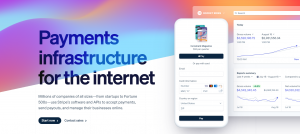
Stripe is a technology company that builds the infrastructure for the internet. Lines offers a payment system that can be integrated into applications via digital API connectivity. One of its superior platforms is that it can easily accept payments from abroad. Millions of businesses of all sizes—from startups to large enterprises—use Stripe's APIs and software to accept payments, send payments, and manage their business online.
Not only payment services in general (payment gateway), Stripe also has products that make it easy for subscription systems, payment card creation (virtual/physical), to machine learning-based fraud protection solutions. That said, Stripe is the embodiment of a complete payment service for now. Stripe has now obtained registered status from Bank Indonesia as a financial technology provider under the auspices of PT Stripe Payment Indonesia.
Uses of Stripe
Remove financial complex, Stripe works with financial institutions, regulators, payment networks, banks, and consumer wallets so that all businesses running on Stripe don't have to. Stripe combines a payments platform with an app that delivers revenue data at the heart of business operations. There are three products presented by Stripe:
- Application
Stripe provides applications for managing revenue, preventing fraud and being able to expand internationally. Some of the products included in the application are: Radar, Sigma, Billing & Atlas
- Financial Services
Stripe provides a reliable payment engine that can make money transfers easier.
- Infrastructure
Not only related to payments, Stripe also provides a cloud-based infrastructure that prioritizes reliability, scalability, and security. As the world's fastest growing developer platform, Stripe gives businesses the tools and technology to build better.
The Origin of Stripes
Stripe was first launched to the public in 2011 and now has around 4000+ employees in 14 offices worldwide. Stripe's headquarters are in San Francisco and Dublin, Republic of Ireland while other offices are located in London, Paris, Singapore, etc.
Stripe aims to be a global payments platform designed to modernize corporate commerce. Stripe also helps companies simplify global expansion, optimize their payments infrastructure, and easily add new business models and revenue streams.
Stripes Struggle.
Stripe in Indonesia is led by former executive director of Grab Indonesia Ongki Kurniawan – PT Stripe Payment Indonesia has now obtained a permit from Bank Indonesia, the permit was granted in March 2020 and is included in the category of financial technology.
Reported by Tech in Asia, Stripe said he chose not to comment on his plans in Indonesia for now. Launching a payment gateway business in Indonesia is a big achievement for Stripe. In addition to more legal hard work, companies will be herded into a market occupied by "ambitious players" who have recently received large capital injections.
According to Joshua Chong, analyst at research and fintech consulting firm Kapronasia, Stripe's services are already available in 41 countries, mostly markets with more mature online payment ecosystems and relatively high credit card penetration rates.
In addition to intense market competition, strict regulation from Bank Indonesia can also be a major obstacle for Stripe, and Stripe will also find it difficult to enter markets in Asia, which has a less developed payment ecosystem, especially those with low card penetration rates. and the widespread use of bank transfers, digital wallets and other local payment methods (LPM).
Regarding licensing, foreign actors are often constrained by unexpected decisions from regulators. Published last July, the latest regulation states that a minimum of 15% of all shares and 51% of voting rights in payment service providers must be owned by Indonesian citizens or legal entities.
Stripe is not alone in this: To date, no other global payments company has directly launched its products in Indonesia, they have used an investment strategy with domestic companies. Alipay, for example, has collaborated with local conglomerate Emtek through the Dana e-wallet, while PayPal has penetrated into Indonesia through an investment in Gojek.
That said, such a strategy is familiar to Stripe. In Malaysia, the company's first Southeast Asian market, it teamed up with local fintech company PayNet in 2019. To strengthen its presence in the emerging African market, Stripe acquired Nigerian partner PayStack in 2020. Stripe is expected to take similar steps in Indonesia.
“Investments and acquisitions would be good options for Stripe to consider, either as a way to obtain the necessary licenses or a faster path to establishing acceptance of local payment methods. But again, potential regulatory resistance to M&A activities needs to be considered,” said Chong.
Kreatiklan's team can guide you to the right steps in your branding activities to achieve the results you want with your customers. Consider yourself to get the right branding strategy by contacting us info@kreatiklan.com or simply hit (+62) 87-780-561-569.


